 Sergio Carracedo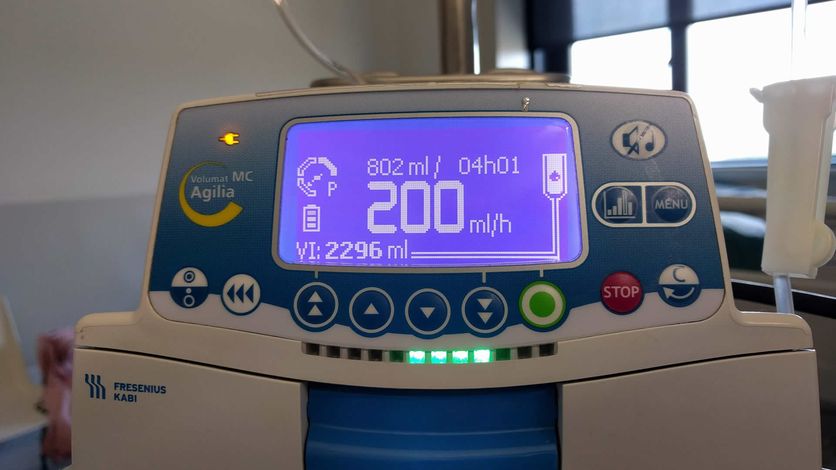
First of all, I want to clarify that what I am sharing is based on my personal experience; it is not intended to be a reference or advice for others.
As I mentioned in the previous post, each time you “receive” the chemotherapy treatment, it is called a cycle. In my case, it happens every 21 days.
I’m going to tell you what one of my cycles is like.
The first step is to go early, between 8
and 8 AM, to the day hospital. There, they perform a blood draw for an analysis marked as urgent by the oncologist. This analysis “measures”:- Platelets
- Leukocytes
- Bilirubin
- Blood urea
- Na/K (Sodium/Potassium) in blood
- …
These results will tell the oncologist if you can receive the chemo cycle. If something is out of order—for example, low leukocytes—it cannot be administered and would be postponed for a week.
About an hour or an hour and a half later, I have the consultation appointment with the oncologist (the time is an estimate because we all have appointments at the same time, and it depends on whether the laboratory results have arrived).
This appointment is to review the recent blood work, see how the side effects from the previous cycle are going, and if everything is okay, schedule the chemotherapy treatment. They also give me the appointment for the next cycle.
Scheduling that day’s treatment consists of a medication sheet where, in addition to indicating the drugs and chemos to be administered intravenously, it specifies the flow rate and the time.
With the treatment sheet, I go to the nurse, who confirms the appointments in the computer system and orders the chemos from the hospital pharmacy.
Chemos are generally prepared on the spot and customized for each patient based on weight, body surface area, etc.
You go back to the waiting room until the chemos are ready.
Once the chemos arrive at the day hospital, they call me in and sit me in a chair (or in my recent cycles, they move me to a bed since I am receiving an intrathecal treatment that requires a puncture in the spine). They access my central line (port).
The port (reservorio) is a kind of chamber that was previously implanted on the right side of my upper rib area under the skin and connected to a “thick” vein. In my case, it is very similar to this: https://www.angiodynamics.com/products/20/Smart-Port-CT-Injectable-Port/
The chemo is administered through a sort of flow meter—that little machine like the one in the header image. This is something that had always caught my attention when seeing people receiving chemotherapy, and I didn’t know what it was until now that it’s my turn to be part of it 😂.
The “only” thing this machine does is regulate the flow rate of the treatment (which usually comes diluted in saline solution); the nurse programs the flow rate and the administration time.
Between one chemo and the next, what is called a “flush” is done, which consists of administering saline solution to dilute the chemos.
Some “chemos” require premedication—that is, medications to prepare you for the chemo, such as Paracetamol, Ondansetron (to prevent nausea), and others.
In my case, the part of the cycle administered at the day hospital lasts just over 7 hours, mainly because of the Rituximab. It has to pass at a low flow rate (it varies every 30 minutes, starting at 100ml/h up to 400ml/h, increasing in increments of 100ml/h) to avoid adverse reactions (spikes in blood pressure, etc.), which lasts about 4 hours.
Between chemos, a “flush” with saline solution is performed.
Some of the “chemos” (vincristine, adriamycin, and cyclophosphamide) are vesicants, meaning they cause blisters if they come into contact with the skin. Because of this, when you are on them, you cannot move from the chair/bed to avoid the risk of the line coming loose and the substance falling on your skin.
Regarding vincristine, a “curious” fact: according to Wikipedia, its safety margin is very narrow; the dose of maximum effectiveness is very close to the lethal toxic dose, which makes you feel quite calm 😂.
Part of the cycle also includes medications taken through other routes. In my case, prednisone, a corticosteroid (anti-inflammatory) administered in oral tablets, which I take at home over the following days.
These chemos cause a deterioration of the immune system, usually in the following week, as that is the period in which the immune system renews itself. To improve its recovery, I have to inject myself in the abdomen (subcutaneously) with Zarzio (Filgrastim), a medication that jumpstarts the bone marrow (where leukocytes are produced). This causes bone pain, like when you have a massive flu but without the other symptoms. And I must not be in contact with children or pregnant women (they have a strong, active immune system and can spread illness without having symptoms themselves), nor be in crowded places.
The side effects of chemo vary by person. In my case, they are not too “severe” and are manageable although annoying, for example:
- Very dry skin
- Hair loss (partially; I haven’t lost it all on my head, and what remains is weaker and lighter)
- Getting wounded easily or wounds taking longer to heal (due to the drop in platelets)
- Sores or wounds in the mouth
- Metallic taste
- General fatigue
- Back / neck pain
- Excessive increase in appetite (caused by Prednisone)
- Loss of sensation in the hands (caused by Vincristine)
- And some milder ones…
